Strength Training · Running · Triathlon · Injury Prevention
Strength Training for Runners & Triathletes: How to Prevent Injuries and Get Faster
May 27, 2026
A pulling pain along the shin, a stab in the knee after kilometer 12, or a blocked lower back on the bike: almost every endurance athlete knows at least one of these symptoms. The classic reaction is usually rest, stretching and the foam roller.
The actual cause, however, is rarely the endurance volume itself, but rather the insufficient resilience of tendons, ligaments and the surrounding musculature. Well-designed strength training is therefore not an obstacle for endurance athletes, but the fundamental requirement for completing high training volumes pain-free in the long run – while getting faster.
90 kg on the Running Track – And Why My Knees and Shins Still Hold Up
Many endurance athletes are afraid of heavy strength training. The concern: “I’ll get too heavy, lose my flexibility, or damage my joints.”
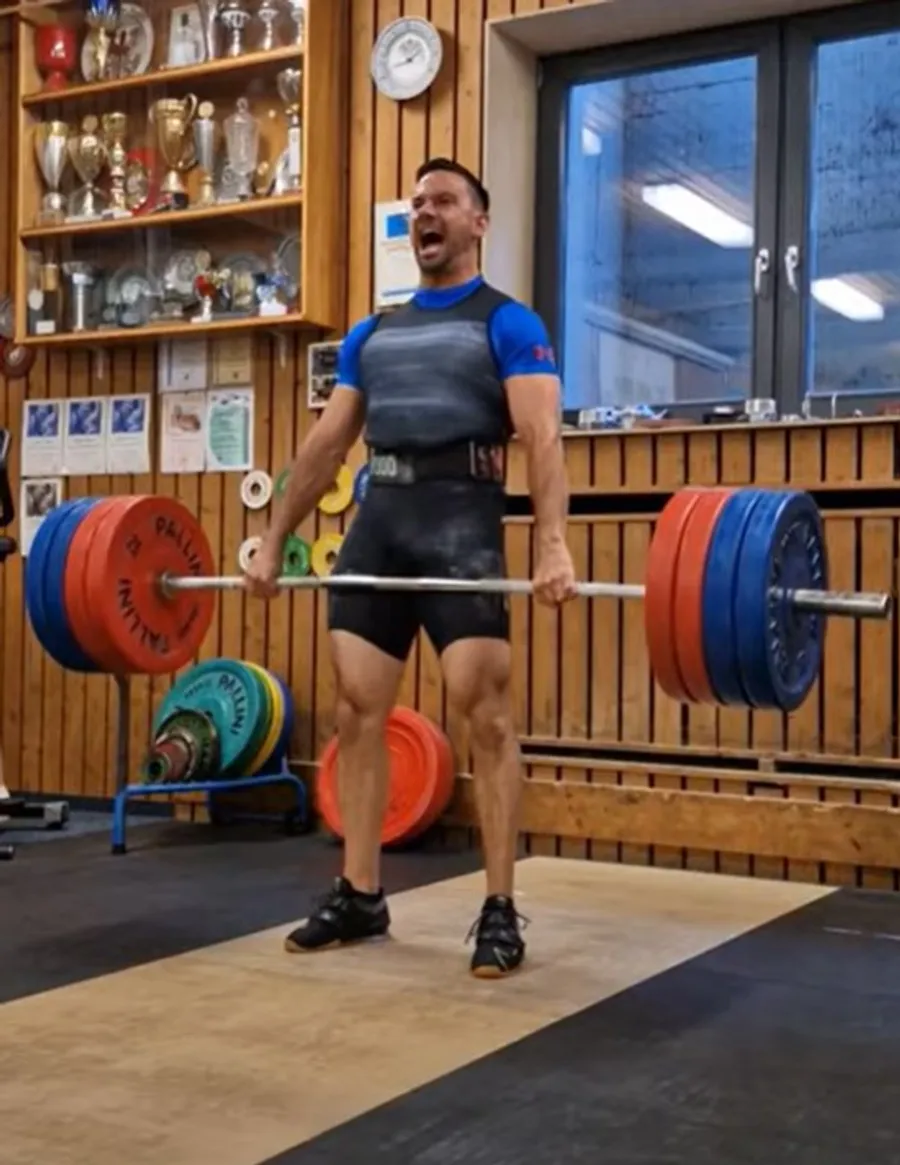
The reality looks different. As a runner and triathlete, I weigh around 90 kg. With every step while running, 3 to 5 times your own body weight acts on tendons and joints – at 90 kg, that’s several hundred kilograms per step at certain points.
Despite this weight and high training volumes, I’ve never had to deal with typical overuse symptoms like shin splints or knee pain. The reason isn’t a genetic stroke of luck, but years of progressive strength training with heavy compound lifts. Anyone who specifically prepares their tendons and bones for high mechanical loads in the weight room makes their musculoskeletal system resilient against the monotony of racking up kilometers.
The 3 Pillars of Effective Strength Training for Endurance Athletes
A few half-squats on the leg press machine or hours of planking aren’t enough to measurably improve running economy or effectively prevent injuries. My system rests on three central pillars:
1. Heavy Compound Lifts for the Passive Musculoskeletal System and the Back
Squats, deadlifts and lunges are the foundation. They not only strengthen the major muscle groups but also increase bone and tendon density. A strong lower back protects you from the typical postural breakdown in the final kilometers of a marathon or after hours in the aero tuck on the bike.
2. Power Cleans & Plyometrics for Explosiveness and Running Economy
Running is essentially a series of single-leg jumps. The stiffer your tendons work (especially the Achilles tendon), the more energy your tissue stores with each ground contact – like a spring.
- Power cleans: Train whole-body explosiveness, activation of the posterior chain, and core stability under heavy load.
- Plyometric exercises (drop jumps, bounding, jump variations): Shorten ground contact time and ensure you use less energy per step – making you faster without additional oxygen demand.
3. Functional Strength Training for Stabilization
Complementary exercises for the foot arch musculature, hip abductors and core prevent micro-rotation in the knee and pelvic tilt. They close the gaps between the major compound lifts and are often the decisive element against recurring issues.
Periodization: Which Strength Training Belongs in Which Phase?
You don’t have to lift maximal weights year-round. The intensity and focus of your strength training adapt to your endurance macrocycle:
| Training Phase | Weight Room Focus | Exercise Selection | Goal |
|---|---|---|---|
| Off-Season / Base Phase | Maximal strength & structure | Squats, deadlifts, heavy presses/pulls | Build tissue resilience, correct imbalances |
| Specific Phase | Explosive power & reactivity | Power cleans, plyometrics, single-leg exercises | Improve running economy, shorten ground contact time |
| Competition Phase | Maintenance & functional stability | Minimalist strength training, core, mobility | Minimize fatigue, ensure freshness for competition |
Practical Example: How to Fit Strength Training Into Your Week
Effective strength training for endurance athletes must be time-efficient and must not negatively affect key endurance sessions. Two sessions per week are entirely sufficient.
Sample Session (Specific Phase):
- Activation & Plyometrics: 3 sets x 5 box jumps / pogo hops (focus on short ground contact time)
- Explosive Power: 4 sets x 3 reps power cleans (focused explosiveness, clean technique)
- Maximal Strength: 3 sets x 5 reps squats (heavy, but controlled)
- Unilateral Stability: 3 sets x 8 reps Bulgarian split squats per side
- Core / Prevention: 3 sets tibialis raises (for the shins) & side planks
No More Pain in Endurance Sport
You don’t have to accept that knee pain or a nagging back simply “come with the territory” as your mileage increases. With the right combination of heavy strength training, explosiveness and intelligent periodization, you protect your body – while becoming a faster, more economical athlete.
Still have questions about this?