Endurance Sport · Periodization · Strength Training · Hybrid Athlete
From Weightlifter to Endurance Athlete: Why You Need to Periodize Your Focus
August 07, 2026
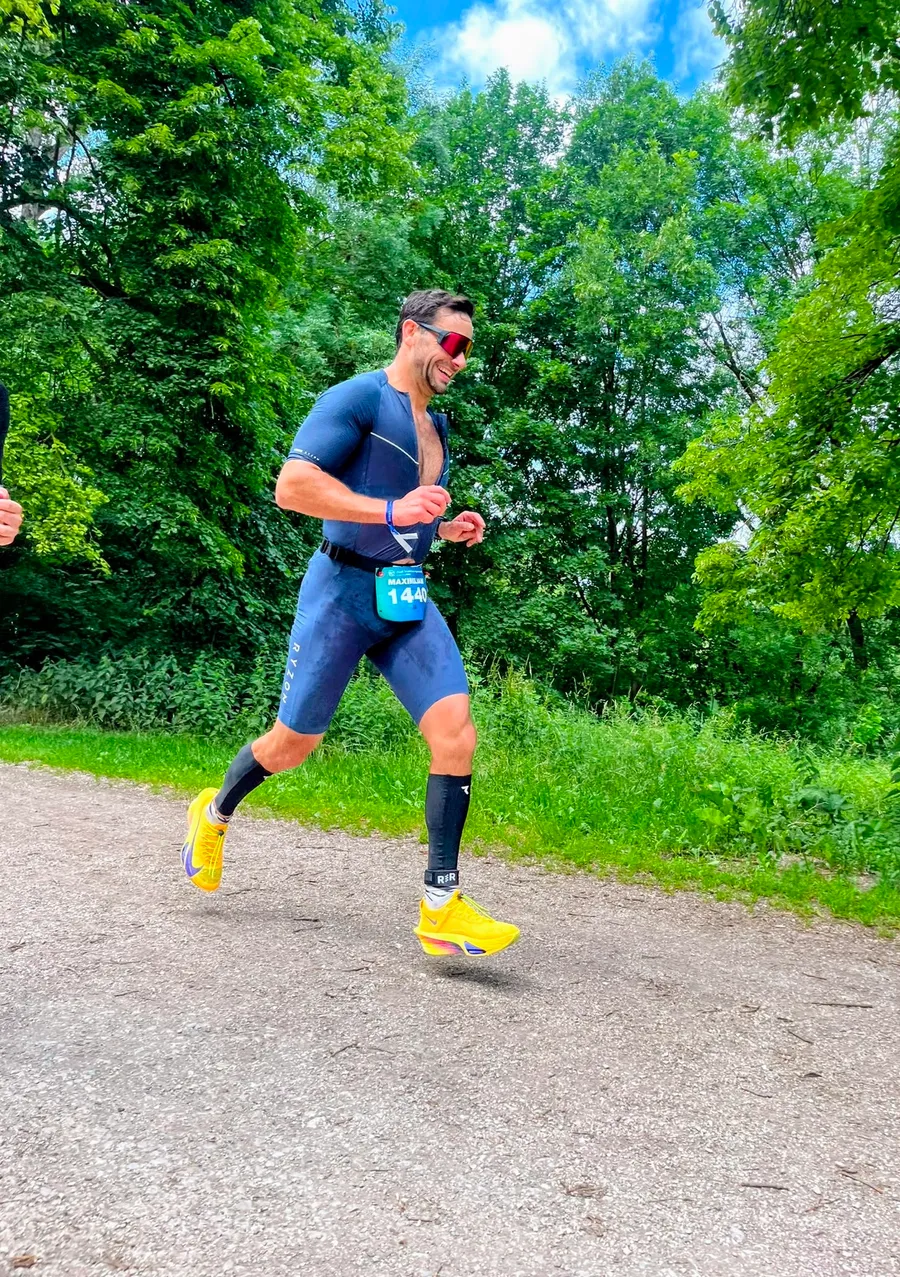
Entering the world of endurance sport as a weightlifter or heavy strength athlete sounds like a contradiction to many. If you head out onto the running track at 90 kg body weight or sit on the bike for hours, you often get the same skeptical looks: “Aren’t you losing all your muscle?” or “Isn’t that far too hard on your joints?”
The truth is: you can be a strong, muscular athlete and still finish a marathon, or prepare for a triathlon – from sprint distance all the way to long distance like the Ironman.
The biggest mistake most hybrid athletes make on this path is trying to maximize both systems 100% simultaneously. Here’s why that doesn’t work, and which periodization strategy brings you real breakthroughs in both disciplines – regardless of whether your goal is a 10K run, a marathon, or an Ironman distance.
The Myth of “Maximizing Everything at Once”
If you come from a strength sport background, you’re used to setting hard stimuli and seeking progressive overload. When you then discover endurance training, you probably tend to apply the same all-or-nothing mentality: heavy squats on Monday, intervals on Tuesday, tempo run on Wednesday and long sessions on the weekend.
The problem: your body has only a limited recovery budget.
If you try to build maximal hypertrophy or maximal strength and maximal base endurance at an absolute peak level in parallel, you inevitably end up in one of three dead ends:
- Stagnation: You don’t really improve in either discipline because the body’s adaptation signals interfere with each other.
- Chronic exhaustion: Your central nervous system burns out, your sleep quality drops, and your performance collapses.
- Injuries: Tendons and ligaments can’t keep up with the doubled training volume.
The Solution: The 8- to 12-Week Focus Model
Real hybrid training doesn’t mean doing everything every day. It means prioritizing over time. You get the best and most sustainable results by dividing your training year into focus blocks of 8 to 12 weeks each – each with a clear priority and a pure maintenance program for the second discipline.
Phase 1: The Strength Focus (8–12 weeks)
- Goal: Build maximal strength, explosiveness and tissue resilience.
- Strength training: 3–4 intense sessions per week focused on heavy compound lifts and speed strength.
- Endurance training: Reduced to a maintenance level (base, short to medium sessions) to preserve the aerobic base without disrupting strength gains.
Phase 2: The Endurance Focus (8–12 weeks)
- Goal: Increase endurance volume, build specific race pace, improve threshold performance (FTP / CSS).
- Endurance training: Priority lies on key sessions (long rides, long runs, interval sessions).
- Strength training: Reduced to the minimal effective dose (1–2 time-efficient sessions per week) to preserve the strength and muscle mass you’ve built.
The Mental Hurdle: Learning to Accept Temporary Losses
The hardest step for a hybrid athlete isn’t the training itself, but the psychology behind it.
If you go into a 12-week endurance focus, you will lose some peak performance on the bench press or squat. Conversely, your running pace won’t reach its absolute best form during a pure strength block. That’s not failure – that’s system.
- Compression instead of loss: With an intelligent maintenance program, you minimize this performance drop to a minimum (usually only 5–10%).
- The elastic effect: As soon as you shift focus back in the next block, strength or endurance returns extremely quickly – and reaches a higher overall level than ever before.
Anyone who tries to chase records in all disciplines year-round will fail. Anyone who learns to understand temporary losses as a planned run-up for the next performance leap will become an unstoppable athlete.
The Core Message for Your Path in Endurance Sport
Your 90 kg body weight and your strength sport background aren’t a disadvantage in endurance sport – they’re your secret weapon, if you plan your phases correctly. You bring tendon stability, core tension and mental toughness that pure endurance athletes can often only dream of.
Don’t try to force your goal – whether a 10K run, marathon, or long-distance triathlon – with brute force as a first step. Use the structure of cascading focus blocks, accept the interplay of specialization and preservation, and build the physique that will carry you over your chosen distance, step by step.
Still have questions about this?